Questions corporate communicators fail to ask

There are staple questions in corporate communications, such as:

  • What’s the broader business imperative?
  • What’s the communications goal that will support the business imperative?
  • What’s the audience (implicitly meaning, who should we be trying to ultimately reach, or influence in order to gain their support?)

All very well, but we too often fail to flesh out the audience questions; we should also be asking:

  • An audience is never entirely uniform: what are the audience segments?
  • What are the values, traits and habits of each audience segment?
  • Can each audience segment be influenced at all?
  • If so, based on their values, traits and habits, what is likely to influence each segment? 
  • How do they consume information?
  • How will our opponents target the same audiences?

The inadequacy of fact-based argumentation in corporate communications

A lot has been written recently on how political bias defines prevalent viewpoints on two of the most scrutinised issues of the day: climate change and GMOs.

In particular, this question is posed: why do people who define themselves as left of centre believe that climate change is real, citing good science, while being almost universally anti-GMO, despite the overwhelming scientific consensus being that GMOs are safe and beneficial?

Probably because a more dominant component of the traditional left of centre worldview takes over i.e. mistrust of big business. Given that GMOs are seen as a product of big business, and contribute to their profits, the science is overridden.

What’s the communications slant on this?

The GMO case is one of many where companies ignore human nature in favour of rationality. In that industry, and countless others, when looking to defend themselves against attack or, more broadly, to manage their reputations, they argue at the wrong level, basing argumentation on fact, ideally backed by science.

But what’s really under attack is often not the facts themselves, but the legitimacy of a profit-making organisation. So what should companies do? Grossly oversimplified, the following: foster a culture where being nice, honest and engaged trumps all; then communicate that culture through real people, not highly polished corporate speak.

Three angles favoured by corporate communicators (which don’t work)

I’ve often heard corporate communicators representing organisations under attack cite one of these three approaches and declare that they’ll turn a corner as long as they aggressively pursue it:

  1. No one understands what we do. “We’ve been too quiet and have not explained exactly what we do – when people understand how we operate, they’ll be supportive.”
  2. Fact vs. fiction. “There are too many falsehoods being perpetuated by critics. We need to rebut these far more actively, ideally using 3rd parties.”
  3. Draw a line the sand. “By being too quiet, we’ve let critics get away with murder. Enough is enough. Let’s send in the artillery and attack the opposition.”

The truth:

  • 3 is unlikely to work: belligerence makes things worse.
  • There’s nothing inherently wrong with 1 and 2, but they don’t work in isolation. If both are practiced simultaneously, and with great skill, they’ll buy some time.

So what does work?

  • If 1 really is true i.e. “no one understands what we do”, a campaign outlining how the organisation operates is not enough. There are probably deeper cultural realities that need addressing: why does no one know what it does? Presumably, they’ve appeared secretive, conceited or combative over the years (possibly all 3). Beyond information provision, a more deep-rooted change in tone and manner is vital: transparency, humility and a willingness to answer questions need to be palpable, with real people at the forefront, not just the polished spokesperson.
  • If there is no truth at all in 1 i.e. if the organisation in question operates in a space in which no amount of cultural change and information provision can improve a damaged reputation, the communicator is fairly powerless. Reputational enhancement can only come about through significant business change i.e. dropping an unpopular product or service, or adapting the operating model or parts of the supply chain. Clearly, these sorts of big decision are C-suite remit and thus (usually) beyond the communicator’s jurisdiction. Unless real change is likely, the communicator is left fighting fires and attempting to stall the inevitable.

Digital Public Affairs services: 3 + 3 (seen vs. unseen)

I developed the digital public affairs wheel a couple of years ago, which does a decent job of summarising how digital can support the three main components of execution in Public Affairs i.e. intelligence gathering, message delivery and relationship/coalition building. What it misses is the background stuff i.e. the unseen work which makes the execution actually work. To this end, I think the following 3 + 3 split works quite nicely i.e. you still have the execution (the “seen”) but in parallel we have the “unseen.”

digital public affairs

“How would we target a digital audience?”

Heard recently: “how would we target a digital audience?”

Although there’s far more overlap these days, most communications specialisms still focus on an explicit audience: public affairs on stakeholders who impact policy-making, brand marketing on end-consumers, and so forth.

But there’s no such thing as a “digital audience.” Digital is horizontal, straddling every communications discipline, and should therefore be ingrained in each.

The fact that the question is still asked, however, helps to explain why some communications professionals still feel comfortable omitting digital from their toolkit: if a “digital audience” is something entirely different, it’s for someone else to worry about.

Public Affairs and strategy

Public Affairs is the communications discipline that most easily gets away with being unstrategic: frequently (not always, clearly) it can be executed without being linked to clear business objectives and a corresponding, measurable plan of execution.

Why?

Detail

The amount of detail often inherent in issues managed by PA pros is far greater than it is in any other communications discipline. Simply being on top of it and understanding which issues and stakeholders matter and doing something about them, however spurious, can be seen as doing enough. Even when there is no way of truly demonstrating outcomes that benefit the organization’s bottom line.

Accountability

PA is often not expected to be as measurable as other disciplines, certainly in terms of true outcomes. This is largely because the ultimate outcome – impact on policy – is governed by so many external factors beyond a PA professional’s control. They are therefore often not held accountable for failure, certainly not compared to say a marketer, who is held entirely accountable if a hike in activity has not resulted in an increase in sales.

Culture

Many PA professionals have little to no experience of strategic communications, and operate in a space in which deep knowledge of policy and relationships are often seen as more important. Granted, both remain essential, but increasingly, influence has to be built up beyond the corridors of power and broadsheet media, and to do so, PA needs to adopt the staples of strategic communications (research, strategic planning, measurement and so forth). However, given that they view themselves as political beasts, not communicators, a number of PA pros are reluctant to do so.

Resourcing

The PA function often remains under-resourced, largely because it is frequently seen as a cost by the people who control the purse strings. Small PA teams thus too often spend their time doing the basics, or fire-fighting, rather than planning for the future.

The work you wish you’d done

A thought raised by a colleague in a meeting earlier this week: “why only show our own case studies? Let’s also showcase the work we wish we’d done.”

I like this. Sure, it’s someone else’s work, but you exhibit the following by showcasing it:

  1. You’re curious enough to look beyond your own backyard
  2. You’re humble enough to admit others might have done it better
  3. You know where to set the bar for excellence (and presumably, it’s the bar for where you want to go)

What’s the work I wish I’d done?

Here’s a start:

Public affairs in 2025: external & internal environments

2025

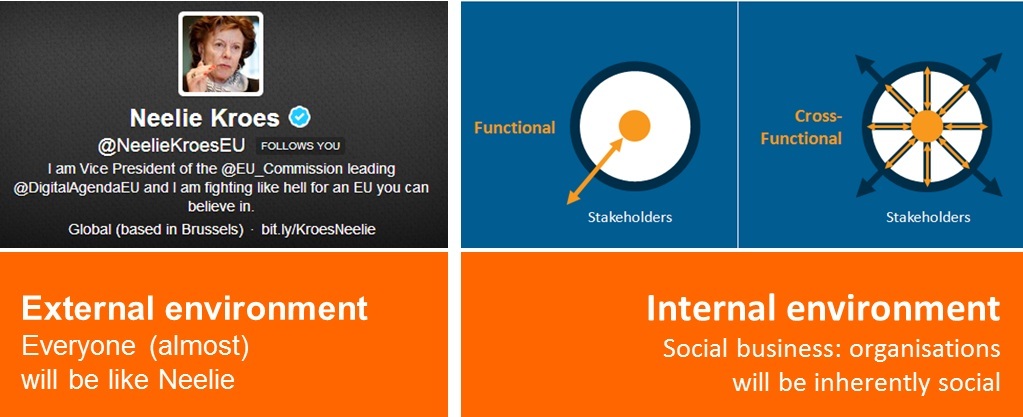
This is a visual that appears as an interlude or concluding slide in many of my presentations. Wild conjecture perhaps, but it summarises two areas where public affairs in 2025 will, I believe, look very different.

External environments

Now, policy-makers and those that influence them are often absent from social media, except some notable exceptions, especially in the tech sector (e.g. Neelie). In 2025, most of them will be active: social will be ubiquitous, and politicians in particular will be expected to engage in the name of transparency. Beyond what’s expected of them, they’ll probably be all over social in any case: generation Y will be at the helm. In public affairs, anyone seeking to build relationships with policy-makers and their ilk will thus need to be active too.

Internal environments

Now, communicators within organisations, including public affairs professionals, still largely control channels of communication. In 2025, social media will be omnipresent inside most organisations i.e. all employees will be active and highly connected and communications will not be able to exert full control. Nor should they. Why? Social isn’t just a means to communicate for purposes of communications (PA, PR, brand marketing etc.) It can also support innovation, product development, talent development and more through engagement with peers within and beyond an organisation. Meanwhile, being an “employee” will mean something far more fluid than at present. Depending on their networks and abilities not related to their core competence at work, employees with no specific PA remit may be your best PA people; those with no marketing remit your best marketers. PA and marketing (and whatever else) thus becomes an exercise in training and guidance as much as actual execution.

Making digital work in Public Affairs: hold off on campaigning, focus on government relations for now

What should the Public Affairs professional seek to do? Two things mainly:

  • Help build solid relationships with policy-makers through the practice we call government relations – and ultimately try to gain their support.
  • Try to shift the pin on issues more broadly i.e. get public opinion on side so that government relations becomes less necessary (in theory, at least).

Usually, digital is seen as part of the toolkit for the latter i.e. “shifting the pin”.  And for good reason: it’s got unlikely candidates elected to political office and it’s made poorly funded activist campaigns take off and beat the big boys. It’s quick, access is mostly free and it’s ubiquitous. It’s a great storytelling medium and it’s the best and most cost-effective mobilisation channel ever devised. It’s TV, radio, telephone, water-cooler and soapbox in one.

What’s not to love? In Public Affairs, especially in Brussels, two things:

  • Plenty of Brussels dossiers are technical and don’t interest that many people, so there’s actually no pin to shift.
  • More importantly, even when there is pin shifting to do, structural issues within organisations get in the way. The Public Affairs function tends to cover government relations and little else and has the people and budget to do just that. Unfortunately, shifting the pin takes a variety of skill-sets (campaigning, creative type stuff etc.) which organisations may have collectively somewhere amongst their marketing and communications people, but not in PA. Plus it costs lots of money: usually far more than PA folk are given.

Is this a long-winded way of saying that digital in PA is obsolete? Not quite. I would argue that without the right people and budgets, there’s no point in trying to shift the pin. But sometimes the right people and budgets are available, and down the line, when we’ll see PA and other marketing and communications functions at the same table, there will be an upsurge in shifting the pin type activities.

While we patiently wait, I’d focus on where digital can support government relations. It doesn’t have to be big and flashy, but it can help drive an agenda. How? I’d centre on three things in particular:

  • Highly targeted content which mirrors what the government relations team is saying and doing. We’re not talking fluffy content stating that organisation X is saving penguins 5,000 miles off, but rather, exactly the same storyline recited to decision-makers but told through an alternative channel. Then ensure it reaches the intended audience through highly targeted paid media i.e. search engine and social advertising.
  • Social media (Twitter mainly, but possibly also LinkedIn and at some point Facebook, depending on the issue) but only when used as an alternative channel to engage with main targets. If they i.e. policy-makers and key influencers aren’t active, don’t bother: social networking for GR purposes is useless if no one you care about is at it, clearly. And get people who build offline relationships to replicate online i.e. don’t hand it off to the intern.
  • Use a listening platform to do three things: learn more about your targets’ constituents, track stakeholder activity so you know you’re picking up the vital exchanges for social media engagement, and track uptake of your GR activities (see my previous post for further details on this.)

Online listening and government relations

In government relations, online listening is often only used to conduct traditional media monitoring. I’d argue there are other ways of using online listening platforms that are more directly related to GR activities, such as:

Pin-point research

For instance, when looking to carry clout with MEP X, assess the issue, company or sector’s saliency in their constituency by carrying out searches specific to that constituency only. Who is talking about it? What’s trending? What’s the prevailing sentiment? The insights can be used to target more narrowly.

Tracking a select group of online stakeholders vs. key issues

“We only care about max 100 people,” GR professionals will spout: a small hotchpotch of politicians, officials, media, analysts etc. In addition, they only care about the 100’s view on the few issue(s) that matter to the organisation in question. Given this, online listening is deemed too broad to be of interest. In this case, set up alerts to be notified only when any of the 100 mention the organization or any of the issues of interest. It’ll probably only be a few times per day if that, but will allow you to cut through the clutter and pick up highly relevant material only.

Identifying new influencers

Maybe it’s not just 100, but 101? But the 1 you’ve never heard of because they’re a new online influencer based beyond the usual sphere of interest, and yet they’re communicating around your issues and appear to be increasingly influential. Listening platforms will allow you identify them.

Assessing the impact of own activities

By aggregating mentions of terms, online listening platforms can help determine trends over time: people spoke about company X & issue Y this much in June, but less so in July. And so forth. If you’re trying to convince Brussels and a couple of national capitals of something or other through GR, you can track the impact you’re having by measuring trend development even among a highly select group. For instance, you’re spreading “message x” in Brussels and 3 national capitals. Use your platform to track the diffusion of “message x” in Brussels and the 3 national capitals week by week, and only among the select group of stakeholders you care about. And in contrast, track the rise/fall of your opponent’s “message y”.

NB: listening platforms can do lots more, but the thoughts I list relate strictly to supporting the government relations function.